
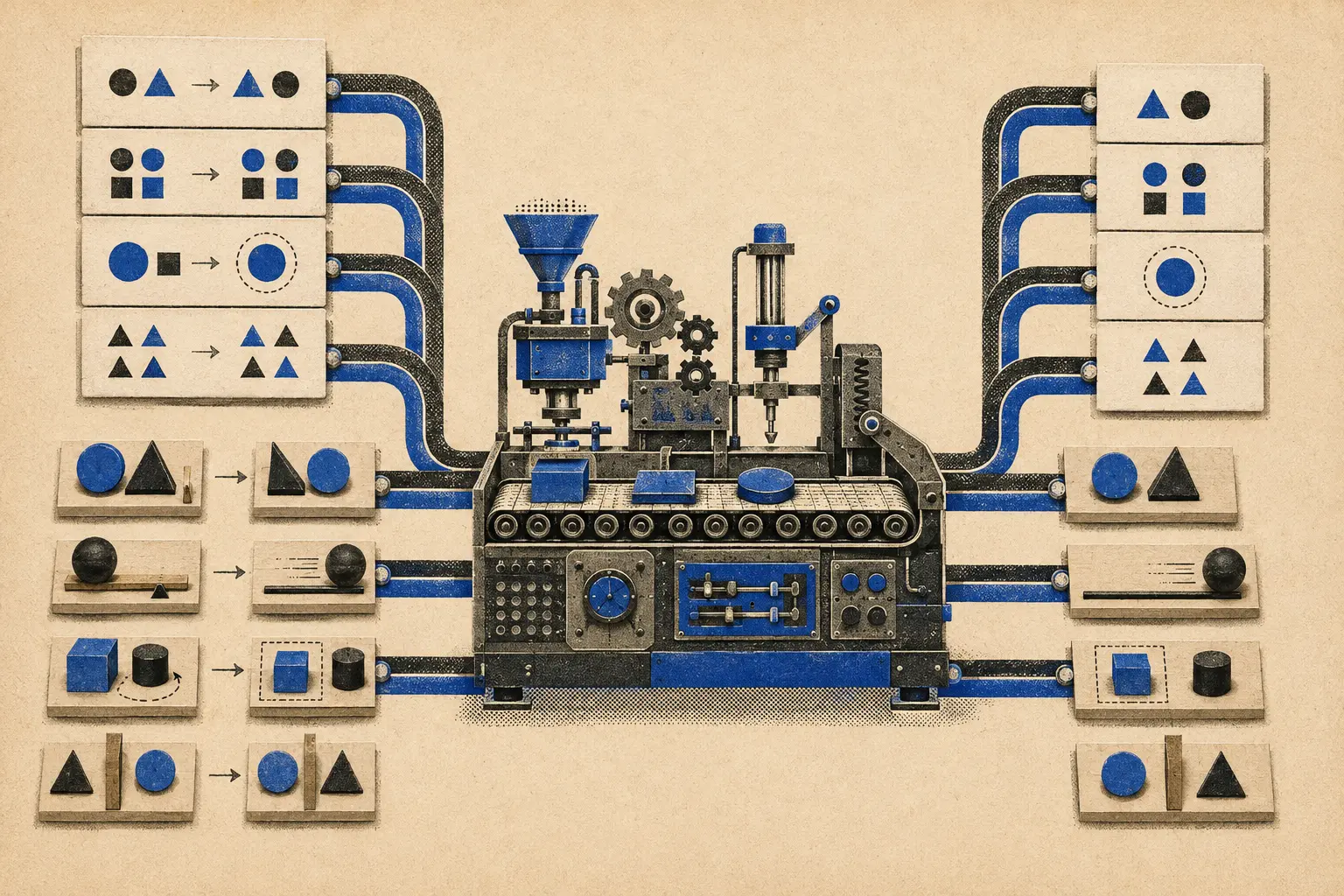
The first promise of an AI software factory is speed. Agents can inspect a codebase, prepare a change, write tests and produce documentation much faster than a person doing each step by hand. But speed is useful only when the direction is correct. A fast implementation of the wrong business behaviour is still wrong—and now it arrives sooner.
A ticket is not always a contract.
Most requirements begin as a discussion, a presentation or a ticket. Important details get spread across comments and meetings. Engineering makes reasonable assumptions. QA makes another set. The business sees the finished feature and says, “This is not quite what we meant.” This problem existed before AI. Agents simply make the gap more visible because they can act on an incomplete instruction so quickly.
A software factory therefore needs a functional boundary: a precise description of behaviour that the business, product team, engineers, QA and agents can all read. Behaviour-Driven Development gives us that boundary.
BDD tells the factory what “done” means in the language of the business.
Given, When and Then are simple for a reason.
A BDD scenario describes the starting context, the event and the observable result. Consider a payment limit change:
When the customer attempts another transfer
Then the payment is declined and the approved limit message is shown
This is understandable without reading code. It also exposes questions early. Which timezone defines the day? Do reversals restore the limit? What happens to a scheduled payment? Those conversations should happen before implementation, not after a defect reaches testing.
The same boundary must verify the result.
BDD is often treated as a requirement-writing exercise. In a software factory, it must do two jobs. First, the approved scenarios constrain what agents are allowed to build. Second, those same scenarios run as functional verification against the result.
This continuity matters. If requirements are translated into a developer task and then translated again into QA cases, meaning can drift at every step. An executable behaviour stays connected from business intent to production evidence. A failed scenario goes back to the team with a clear explanation: the promised behaviour did not hold.
Not every test belongs in Gherkin.
BDD is strongest for observable business behaviour. It should not be used to describe every class, method or internal calculation. Unit tests, contract tests, security checks and performance tests still have their place. Turning all technical verification into Given, When and Then creates noise and makes the important scenarios harder to see.
A useful test is whether a business owner can confirm the behaviour and whether a user or connected system can observe the outcome. If yes, BDD is likely the right contract. The technical implementation can remain below it.
TechMojo Software Factory places BDD before execution and inside verification.
A BDD Agent turns requirements into scenarios, edge cases and acceptance boundaries for human approval. Lead and Execution Agents work within that contract. The Verification Agent then runs BDD Functional Verification as the first of four evidence pillars and maps every result back to the approved requirement. If behaviour fails, the work returns for correction rather than moving quietly forward.
Explore TechMojo Software Factory →A better conversation, not only better automation.
The real value of BDD is not the syntax. It is the conversation it forces. Product, business, engineering and QA agree on examples before code is written. Agents can help find missing cases and keep traceability, but they cannot decide business policy on their own.
This makes human intervention more useful. Instead of reviewing thousands of generated lines, a domain owner can approve ten important behaviours and examine the evidence for them. The software factory handles the mechanical work while people retain authority over intent.
Speed needs a fence.
AI-assisted development will keep getting faster. The important question is whether business understanding can keep up. BDD gives speed a fence: build inside these behaviours, show evidence against them and stop when the contract is unclear.
That is not extra process. It is how an agentic factory produces software the business can recognise, test and trust.
This field note is part of TechMojo's series on production-grade software engineering.